Being Tired.

the drama of exhaustion----uncanny things happen when you're tired
Exhaustion.
Tired.
Worn out.
But, ironically, able to survive.
Live.
Love.
Smile.
It is a circumstance but also a choice 😉
the drama of exhaustion----uncanny things happen when you're tired
Exhaustion.
Tired.
Worn out.
But, ironically, able to survive.
Live.
Love.
Smile.
It is a circumstance but also a choice 😉
money makes the world go around, the world go around
I remember when I learned what money meant. It wasn’t only dollars and cents; it was divisions and definitions. Who you are, what you can have, what you can’t have, how you can make a life for yourself–all these things manifested materially.
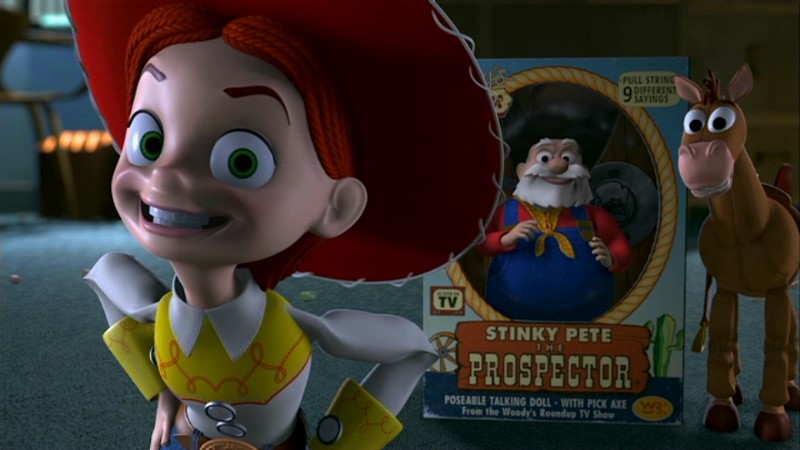
It was Barbie. In the Walmart toy aisle. With the red cowgirl outfit.
Mom explains that she was expensive. Like a Christmas gift. Suddenly, the $20 on her price tag took on value. They represented the paper money in Mom’s wallet, the hours Dad was gone during the day working to earn that money, the weeks and months I would have to wait to have her, and the thrill of possession when she was finally mine. Although the toys have changed, the psychology of provision doesn’t really.
My dad still worries that he can’t provide us enough. Or he wonders if we are grateful for what we have. He views life itself as a luxury; we try to problem-solve it. There is a generational gap, and there is a generational discourse that happens in every penny, every exchange.
Toy Story 3 and its preceding films have picked up on this theme of materialization. The filmmakers at Pixar understand that the abstract expression such as love, care, attention, protection, etc. are made real through objects. We need food, shelter, and warmth to survive, of course, but those delicacies of philosophy that make Life happen must be brought to earth. Plastic and metal and electricity and wood–these mediums often bear its weight. Toy Story 3 was brave enough to take us to the brink of its destruction: what does the deterioration, the breaking down of our material world say about those immaterial things that it represents? What does my brother’s decision to upgrade his cell phone and get his own plan say about his relationship with my dad?
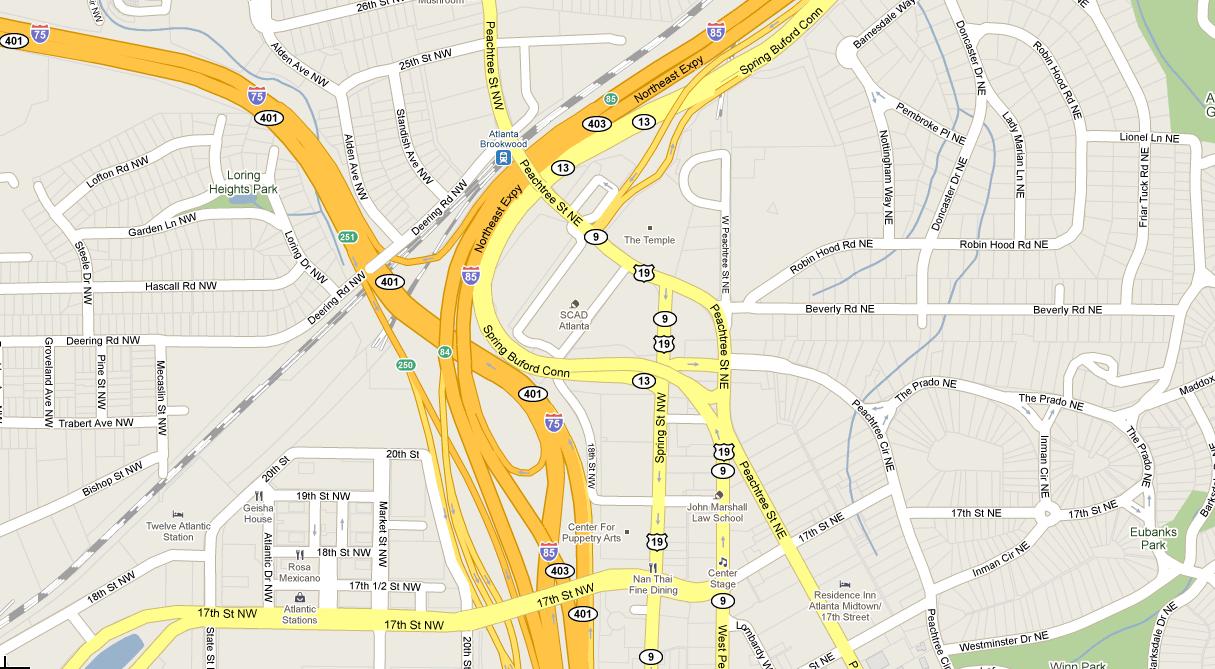
read Barton&Barton "The Ideology of the Map"
My usual introduction to a new customer that approaches my cashier counter runs something like:
“Hi! Did you find everything you need? Have you shopped with us before? No? Well then, I am going to create an account for you in our system, which will save all of your receipts for future reference.”
Today, a dad replied that he did not want an account at all—no name, no number, and most certainly no shipping address. He didn’t want spam and mailings and courtesy calls and all the other infringing crap that corporate (and not-so-corporate) companies thrust down the innocent throats of the consuming public. I don’t blame him.
But alongside another parent who gravitated toward our e-mail list sign up sheet and instantly provided name, phone, email, and school of attendance, this dad suddenly represented a totally difference approach to life. There were two paradigms at my counter: fear of attack and fear of failure.
One parent didn’t want to fend off the aggression of civilization. Another parent didn’t want to miss the opportunity to participate in any way with the ins and outs of said civilization. One was afraid that he couldn’t protect himself. One was afraid that he would be sheltered from something beneficial. Two outlooks. Two different ways of approach a world that demands out attention and can punish us either way–for hedging ourselves in too securely or volunteering our involvement too freely.
I fall into the second category–volunteering too freely. Especially as a newly graduated liberal arts student, I forget that I should get paid to do what I do. I forget that it is illegal for my boss to pay me less than the IRS cents/mile ratio when I travel. I forget that not everyone I give my business card to should know my street address, where I sleep at night.
Navigating the world is tricky. And there really are people that choose different tactics than me. And I should make space for them–like I hope they would make space for me.

opening a door: routine =life
There are so many things that we are supposed to do on a daily basis that doing them all (as recommended by your doctor, friends, family, magazine, and pop culture icons) would take a millennium at least. So, I have long avoided adding anything to my routine…which I have recently discovered is, in fact, my life.
Because of this avoidance, I do not write as much as I want. Or read. Or dance. Or stretch. Or play with my parakeet.
So, I am adding writing to my nightly routine—and maybe it will be worth the longer “to-do” list. Because, after all, what is a “to-do” list but your plan for making life happen? It becomes a burden when we put other people’s lives on it. Other people’s expectations of our activity that end up causing us to live their lives instead of ours. I am putting writing on my list because I want to write. I am not putting eating vegetables on my list because my doctor, not me, wants me to eat more vegetables.
I want to talk. I want to write. I want to say things and create meaning because therein is the significance and the delight (and the toil) of life. Could I keep quiet and find reward in doing my hourly job well? Having clean laundry and a straight room and ice cream for dessert? And be happy? Yes. Most certainly.
But I also kind of want something more. Not because my life is insufficient, but because I realize that I am living life intentionally or not and I would rather choose what I am doing, put some desire into it, than simply fulfill expectations on behalf of other people. So, tonight, I will be getting fifteen minutes less sleep because I wrote this rambling blog. But eventually, those fifteen minutes each evening might accumulate into fifteen Original Thoughts that coalesce meaning and significance out of my daily routine–or perhaps simply lend expression to the significance already there but imperceptible apart from a fifteen minute staring contest.
The original post that shared this video commented that three years ago this short animated film about two girls that are trafficked into the sex industry would have been sensationalist.
Now, it is not. This reality is growing too familiar.
But animating the horror of human trafficking reinvigorated its tragedy. Whether victims are kidnapped as children or lured as women, trafficking manipulates and destroys the innocent expectation of good in the world. It is the expectation and hope of something better, perhaps marriage, perhaps a career, that is twisted toward their own destruction. This wounding goes deeper than physical trauma. The energizing vision that we have as children might be matured and focused as adults, but it is the power that pushes us forward.
And these women are arrested. Forced into stasis. Coldness. Immobility.
Some escape–their energy breaks through their bonds.
Others are still imprisoned, regardless or perhaps because of their rebellion.
This animated short articulates the deepest cut, the tragic manipulation of life’s energy into its own destruction.

little girls dream...
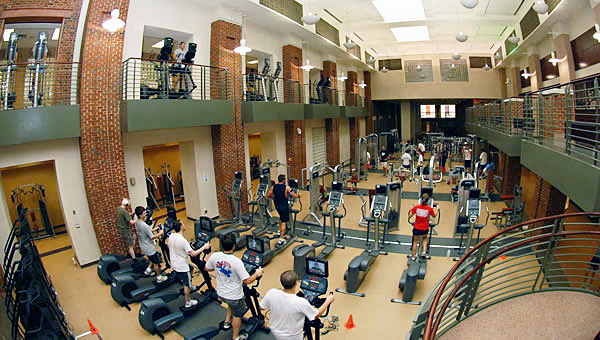
all the exercise machines were full when I was there
I grew up as a gymnast. I know how to work out and be cool and physically fit.
And I was totally intimidated walking into the fitness center on campus! The space is crannied and cramped, full of sweaty people–many of whom you know but wouldn’t dream of acknowledging, since you’re covered in sweat after jogging once around the track (which is a mere 1/10 mile!). The eclectic mix of brick and sheet rock, mortar and metal makes it an interesting space to study while you’re walking in circles like a lost dog on the track above the basketball courts. But the whole layout feeds into body consciousness of the highest degree:
There’s a pit. A pit full of weights and machines, surrounded by other machines all facing into the pit. It’s like the Roman coliseum or something! Watch men flex their strength before swooning ladies, who don’t get the glamor of the sport but have the pressure to maintain perfect bodies. So they’ll run in place in their cute little spandex outfits while they watch you flex your muscles and prove your virility. The personal TVs are nice, but then it reminds me how media-obsessed our culture has become. There is no solace in the simple quiet of private physical exertion–we have to always multi-task!
I really am not as bitter as I sound about working out. It’s super refreshing to feel your body exert itself to respond to your cues to run and breath deeply and stretch and curl and lift and reach and flex. And there’s a certain equalizing effect: everybody is sweaty and dying. And people of all ages are there, enjoying all different kinds of workouts. And if you go with a friend, there is a deeper sense of companionship that somehow happens when you look at each other and are both red in the face. You laugh but not at each other–good healthy, motivating fun 🙂
Maybe I’ll go back to the gym…

Valentine et Joseph regardent...
J’adore le film Rogue. C’est un film avec beaucoup d’intéressant connections–entre les autres films de Kieslowski, mais aussi dans ce film. Valentine tombe dans l’amour avec un homme qui est eu un juge. Maintenant, tout ce qu’il fait est écouté. Il écoute conversations de ses voisins. Au début, Valentine pense qu’il est un dommage. Mais, pendant le film, ils ont appris à l’aimer. Mais, cette amour n’est pas sexuelle ; celle était un lien entre deux âmes. Le juge vieux et le juge jeune sont les deux s’entendant a Valentine. Donc était vous vous entendre ?

More than aftershocks threaten the children of Haiti. ABC reports fifteen children have already been documented as missing in the company of persons not their parents. Children without parents and relatives to protect them in the physical and societal collapse following the earthquake are left more vulnerable than ever to human traffickers looking for a quick profit. But the threat isn’t new.
As I researched what was being done to protect Haitian children during these perilous weeks immediately following disaster, I uncovered a more disturbing reality that has outlasted the shock of seismic waves. Child exploitation has long been entrenched in Haiti by prolonged economic desperation and fragile infrastructure. Let me break down for you what I learned.
Haiti is poor. Says usaid.gov, “With annual per capita income of less than $400 and an average life expectancy of 53, Haiti is the poorest country in the Western Hemisphere. Eighty out of 1,000 Haitian children never see their first birthday, and nearly half the population cannot read. As much as 80 percent of the population lives in poverty.” One solution families are using: the restavek system.
The word restavek is a derivative of the French phrase “to stay with.” Basically, IOM explains, “parents unable to care for their children send them to relatives or strangers living in urban areas supposedly to receive care and education in exchange for housework. But in reality Restaveks often live in hardship, practically enslaved to their ‘hosts’, seldom attending school. UNICEF estimates the number of Restaveks in Haiti at about 173,000, three quarters of them are girls.” The math is overwhelming but not difficult to understand. No money, no food, no way to protect themselves against exploitation.
Then, you position that intense individual poverty inside an infrastructure that is rife with corruption and suspicion, unable to encourage international investment or maintain domestic resources. Drought in the north of the country hasn’t helped the situation either, and Haiti continues its tailspin—a climate ripe for abuse and exploitation of every kind.
Besides the suspect Restavek system, organized traffickers have taken advantage of proximity to the Dominican Republic, whose thriving tourism and sugarcane industries can be harnessed for profits from sexual and labor exploitation. According to IOM and UNICEF, in 2002, over 2,000 children were trafficked from Haiti into the Dominican Republic. Important note: this figure does not reflect domestic trafficking. Additionally, these trafficking rings have been tied to international adoption markets.
But the aftermath of disaster raises the stakes for both ill and good. International relief pouring into Haiti after their disaster could go beyond the immediate rescue and reconstruction of the devastated infrastructure and make headway into the established problem of human trafficking.
Global Centurion, an organization committed to working with non-profit as well as governmental organizations to preempt human trafficking, has put together a strategy for protecting the children waiting for help in the rubble. Firstly, educating government and aid workers about the very real threat of trafficking already established in Haiti could help forestall opportunistic kidnappings. Secondly, efforts to identify and register children in aid camps could facilitate family reunions and prevent illegal adoptions. To get involved in supporting Global Centurion, IOM, and UNICEF, please see the links and resources below.
For excellent quick info:
For my American literature class, we are reading The Color Purple, by Alice Walker.
My heart has never hurt so much while reading a book. It is literally so painful to me that I have considered simply disregarding the assignment and not finishing it. But then I think to myself, although it is fiction, is it not a representation of some[one][thing] that could really exist? This pain is real. This sin is real. This injustice is real. I think of all the girls in sexual slavery. I think of all the girls that cannot even identify the intimacy their hearts long for. I want to cry. I want to lay the book down and never pick it up again. I want to soak in the prayer room for hours and hours and wash away all the sadness and confusion and depression and oppression…
I cannot handle the color red. Christ shed His blood. He encountered sin and absorbed its wounds, His flesh stripped from His body and His face forsaken. He was “Desolate” because “He delights in her”–the joy of His Bride set before Him. Who could ever accuse God of being a perverted Lover, anything but Love itself?! He is the very reality of love. His love is perfect in every way. Truly, He is worthy because He was slain. He deals in the color of blood, the color of life, not the purple of death, the bruising of our souls. He brings life and life abundant!
How can I continue to encounter all this sorrow? I am accepted in the Beloved. A partaker of the Divine nature. My beloved’s: and His desire is for me.
Where is your whirlpool's edge?
 La Reisytal