Archive for the ‘ ponders ’ Category

It Can Be a Fair Game

where will we go from here?

where will we go from here?

At the end of Fair Game, Joe Wilson (Sean Penn) asks a straightforward question: How many of you know the 16 words in President Bush’s speech that led us to war in Iraq? No hands. How many of you know my wife’s name? All hands.

Valerie Plame—the beautiful CIA agent outed by the White House. The 2010 film recounting her story surprised me. What I expected to be an entirely political and propagandistic journey through a news story I vaguely remembered was actually a personal and inspiring interaction with my own Americanness. Valerie Plame’s life may have become fair game in the swirl of government and global relations, but there is hope for this generation to shirk off the embarrassment of American imperialism and participate in the fair game democracy can truly be at its best.

Yes, that was a rather sweeping statement, haha, but I think the film makes a strong case for participation in our government—or at least in the amplification of one’s voice that coalesces with other voices to make a government. And it pulled down grandiose abstracts—Freedom, Duty, Responsibility, Intelligence, and Patriotism—onto the intimate stage of interpersonal life.

where the world happens

where the world happens

Director Doug Liman expertly employed mise-en-scene to contextualize the American ideals in the American reality: the kids running through the kitchen, the dinner pot boiling on the stove, the patient hurrying out of the clinic, the lunchtime rush at a downtown restaurant, the babysitter coming and going, the cold hardwood floor at 3:45 a.m. You could listen to the dialog with your eyes closed and you would find an intriguing debate about the individual versus her government, but you wouldn’t really hear what the film is saying. You have to see it.

With each cut into action, each audio linkage, each carefully mixed ambient track, each fleeting glimpse of a ponytail, each just-out-frame introduction we begin to feel Valerie Plame’s life. Her life. No nation exists independently of the lives of its citizens. Whether they have a voice or are drowned out by power-mongering, those citizens are in fact that country. And this is what Fair Game reminds us.

Each person in the CIA is a normal person trying to be a loyal employee who is good at their job. (A generalization, yes, but one worth making because it is mostly true.) The more challenging implication is that people in power—such as Presidents—have just as much chance of being normal people making the best decisions they can to keep things moving forward as the CIA analyst. And the housewife. And the elementary school student. Life is damn hard, and making it through is a game of luck in which you collect as much information as you can and make the decision that is needed to move forward. Without forward motion, we die.

3:45 a.m.

3:45 a.m.

Now, that does not mean that Fair Game excuses the White House for what happened, for everything from the Iraqi War to the leak of “Valerie Plame.” It goes beyond mere smearing and challenges every citizen to hold its government accountable—to embrace the reality that we the people can make it a fair game once more. And the most beautiful scene is the one that reinforces that accountability and courage starts between two people: Valerie Plame comes back and refuses to let the fiasco steal her marriage to Joe Wilson. Making a name for ourselves within a marriage, keeping the word we have declared at the altar, takes more courage than managing secret covert operations for an employer that hasn’t pledged its allegiance to you.

I will acknowledge that this interpretation of Fair Game was deliciously influenced by screening Invictus earlier in the day. It is entirely opposite: Nelson Mandela has left his family to become the father of a nation. He has become the captain of his soul and taken the lowest road to greatness. Throughout the film, opposition accuses of him of being a self-promoting, distracted politician, and yet it showcases the depth of his leadership time and again. There were moments that reminded me of that glorious line in Batman Begins: if they need someone to chase, the people can chase me for a while. Batman allows the populace to think meanly of him when he is the only reason they have survived. Not because he has an inferiority complex, but because he is willing to absorb the high cost of change for a better world into his own person. That’s what Mandela did.

Invictus: politics is personal

Invictus: politics is personal

And he knew the power of inspiration. That’s why, the film tells us, he committed to the success of South African rugby. Just like Fair Game, Invictus understood that global realities actually form at the basic level of human experience: falling in love, having children, watching sports on TV, playing in the backyard, getting up in the morning, fixing dinner, having tea at 4 p.m. We have the power to change our world not merely because of the new channels of amplification—BBC, CNN, FOX, blogs, television, satellite broadcasts, YouTube, cell phones, high-tech communications—but simply because our world—food, shelter, warmth, clothing, love—is the world.

No, we cannot fully understand everyone else’s experience and it is fatal to assume that we can, but each person is in fact a human. And that makes all the difference.

Sometimes Wearing Shoes Helps You Find Your Way

the most beautiful filmic fairy tale

the most beautiful filmic fairy tale

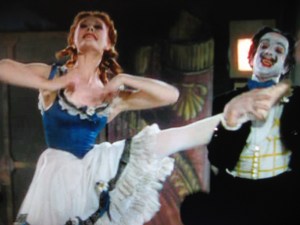
The Red Shoes is quite possibly the most stunning surprise I’ve seen in months.  The exquisite cinematography kept me glued to my iPhone screen for the whole two and a half hours.  Yes, I did it the disservice of watching it on my iPhone, curled up in bed.  But I must say, that The Red Shoes ran away with my soul and will not come back.  I’ll be purchasing it on Blu-ray and sitting spell-bound in my theater room for years to come.

If you’d like to read an informative summary and review, I refer you to Roger Ebert.  But really you ought to simply purchase the film and experience it all by yourself.  It reminded me of why I like to read fairy tales and will continue to read them until I lay upon my death bed—and even then, provided there’s time between the lying down and the dying.

Fairy tales help us travel this difficult world by simplifying it for us: we can recite all the characters by rote—the hero, the villain, the damsel in distress, the comic relief, the love triangle, the wicked relation.  But just because we recognize them doesn’t mean we really know them yet, and throughout the reading, the archetypes becomes sign posts on the journey to understanding.

Fairy tales help us by elevating our world from the mundane to the magnificent.  Death can look utterly wonderful at the final curtain.  The tedious repetition of our decisions is compressed into dramatic climaxes—rising and falling action, twists and turns.  In a fairy tale, your decision stands and you move forward; there is no washing back and forth on the tossing deck of the ship.  Every moment is fatal—and therefore more worth the living.

The Red Shoes may at first appear to be a classic fairy tale about two loves—the older and the younger, the promising and the seasoned.  But really it ends up being a most unique fairy tale: about the two halves of life, the one of work and the one of the heart.  As it is about artists, the parable of the red shoes can demonstrate oh! so painfully how hazy is the devision between the two, work and heart.  You cannot do one without the other: to work you must care and to care you must actualize through activity.  But there is such a desire to be wholehearted that the division in which we live grows into an impassable schism—especially if you are a woman.

trying so hard to make everything work---but your feet are pinned to the charade

trying so hard to make everything work---but your feet are pinned to the charade

To put food on your table, clothes on your body, and a roof over your head, you must perform a certain amount of utility for the world.  You earn your place in it.  But, to perform a certain amount of utility for the world usually plays out as a sacrifice of the dearest things you love: the person eating dinner with you, complimenting your dress, and waking up in your bed.  Our modern economy and  mode of living is predicated on specialization.  That specialization demands isolation of unique skills, repetition of their performative utility, and exclusive positioning in a system of production.

Sound anything like a ballerina performing the reparatory of her company?

We think that the arts are our last bulwark of everything human—that which is cooperative, creative, and mutual—and yet, in The Red Shoes we discover that not even the arts are safe from the pressures of post-industrial mechanism.  And I, lonely though “I” may be, am not willing to give them over without a fight.  Thanks to The Red Shoes, I discovered I was marching down a road I did not choose to a beat I have not written.  Now that I know that, I can turn and run.

http://www.youtube.com/watch?v=10_OAf05RcE&feature=related

((( Voice )))

Hearing my voice on the radio today was quite the surreal experience.  It is said (perhaps only by me) that each person is a 1000 pieces at any given moment: who you are this second is who you were the next and no two seconds are alike.  Patterns emerge, and shapes form as recurring points in a given plane.  But really, people are the most elastic things on the planet.

What I sounded like recycled through my cell phone, the GA cell tower, the AT&T satellite, the host’s phone, the recording software, the editing software, the computer’s audio output, the radio website audio platform, and back through my own computer speakers was so other than myself.  But at the same time, me.  I was struck with how powerful my voice is.  It survived that harrowing journey!  And came out fresh and alive—like a person.

reflections on my self in Spring 2009Sometimes when my parakeets chatter too loudly.  When the commuter traffic drowns my gabbing.  When the stereo pulse absorbs my harmonies.  Sometimes in those moments I feel the strength in my voice rise to the occasion, and sometimes in those moments I feel its existence as intimately as the tree that falls in the forest that nobody hears.

But what’s absolutely, utterly glorious about the human voice is that it never really dies.  It is always amplified—reverberating through the plastic and metal universe we’ve built around our fragile bodies—and it reaches into your soul and says ” I am.”

There is nothing more comforting and ‘couraging than talking to yourself.

The Sweetness of a Sidewalk

I met the Sweet Auburn Curb Market today, and it was love at first sight.

Sweet Auburn Market, 1940

Sweet Auburn Market, 1940

I don’t remember how I received this aesthetic, ethical, geographical predilection—-but somewhere along the way, I picked up a sincere appreciation for eclectic urban spaces with a history, especially a history of reinvigoration.  Perhaps it happened when I strolled down the Thames in high school and listened to the narration of a career school teacher who’d been walking the same path on his annual pilgrimage to London for three decades and watched the turning of the years along the waterway.  Perhaps it happened when I walked the downtown Lawrenceville Square after the new restaurants opened and the Aurora Theater moved into the old church on the corner.  Perhaps it happened when my eleven-year-old self toured the United States in the back seat of my grandparents’ Lincoln, riding from Salt Lake City all the way to Detroit, watching the backbone of America coalesce beneath the tire treads.

Now I’m waxing prosaic.

Back to the Sweet Auburn Market.  It was alive.  It was full of people—all races, genders, classes, socioeconomic sectors—paying homage to the religion of renovation.  The people of Atlanta reached out and reclaimed this quixotic corner as a new center of life and livelihood, and for a few hours I got to sit in the hubbub and dream big dreams of how the world could change.

the open-air coffee house in the corner of the market

the open-air coffee house in the corner of the market

Thank you, Auburn, for empowering another human rights movement.

Confusion in Paris

Confusion in Paris

Confusion in Paris

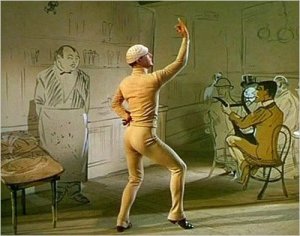
When my friend responded to “Let’s watch An American in Paris!” with “I think I’ve seen that before…I didn’t understand the ending…” I should have been forewarned.

But alas! I have committed to watching all the Best Picture Winners this summer (if possible), and 1951 has undone me.  How in the world did it beat A Streetcar Named Desire?!  I will concede that simply reading the list of winners makes me depressed—thanks to all the intense and “refined” and serious subject matter—and I, for one, appreciate a lively Minnelli musical, but, really?  My only conclusion must be that Freed and his unit hit the nail on the head: an American in Paris is confusing.

The opening voice-overs were promising enough, with witty and cynical characterizations of stereotypical Americans living in Paris.  Gene Kelly was wickedly interesting in his straightforward two-timing role, and Leslie Caron was, well, a French gamine.  (Although I would argue that no one deserves that title more than Audrey Hepburn herself, haha).  The parallels between the patronizing wealthy artist–I mean art collector and the romancing French night club singer were intriguing to about the degree that any conventional juxtaposition is.  Then the ending fell flat on its face.  Too tired of trying to be smart, it drowned itself in champagne bubbles and LSD whirlygigs until it actually believed its own schmaltz.

The one arresting development of the film–besides the hideous headpieces in “Stairway to Paradise”–was the homoerotic subtext.  Almost every love song was actually between two men about some far-distance female figure, whose role as the recipient of the romancing was hilariously adopted by whichever male the blocking conveniently provided for the pose.  The most salient of these moments is Gene Kelly cheek-to-cheek with Georges Geutary, waltzing and dipping through a cafe with a red-checkered tablecloth for a kerchief and a sappy grin as his token of feminine charm.  The film is about men in love, really, and they sort through their confusion all by themselves.  The women come and go as archetypal figures in the male story of navigating the most romantic city in the world.  The American in Paris could almost represent the male in America: expected to perform the rites of affection and affectation in an uncanny dance with the opposite sex, he literally leaps through hoops and fountains and promenades to win our hearts.

Gender performance, anyone?

Gender performance, anyone?

But really, don’t we all simply want simplicity?  Not an American in Paris–a tantalizing and confusing swirl of emotion and cross-cultural (dare I say cross-gender?) performance–but an American in America and a Parisian in Paris: at home with himself, his affections, and his relationships.

Friends with Books

My poor friends—–I am beginning to discover some similarities to how I treat my books and how I treat my friends.  And I hope for my friends’ sake that I get a better handle on things, haha.

I am currently “in the middle” of six books:

Children of Hurin by Tolkien

Children of Hurin by Tolkien

I lied. I finished this one last Thursday. But oh! it’s so good! I forget how large a scale our lives actually fill. Tolkien always inspires me to remember (like Dustin Hoffman insists in I Heart Huckabees) that we are all part of “The Blanket.”

Atonement by Ian McEwan

Atonement by Ian McEwan

I’ve been reading this book since my junior year of college. I insist on finishing it before I’ll let myself see the film. But at this rate…perhaps I’d better bow my head and run to Blockbuster really quick.

The Green Ride by Britain

The Green Ride by Britain

This is my homework from one of my best friends. She discovered that only recently had I discovered what a mage is. Now begins my true fantasy / sci-fi education.

Yossel by Kubert

Yossel by Kubert

In preparation for helping edit the upcoming graphic novel by Meet Justice—which will be one of the first in the nation to deal exclusively with the topic of human trafficking—I am immersing myself in the genre. It’s undoing me from the inside out.

A Moveable Feast by Hemingway

A Moveable Feast by Hemingway

One of my dear friends and fellow English majors is reading this along with me. Damn, I’d forgotten how much I love Hemingway! And here, he doesn’t disappoint as he recounts his Parisian days with the liquid drops of lucid prose that far out perform my own poetic impulses.

Naked Economics by Wheelan

Naked Economics by Wheelan

I find an ironic connection between the balance in my bank account and my interest in this book. Right now, my bank account and I aren’t on speaking terms. Poor Wheelan has been relegated to the out-of-reach corner of my bedside table…

And so I rest my case: many friends, no time, sketchy consistency. To all of you—books and people alike—I beg your pardon.

the pace of our Days

There are too many big thoughts to be thunk.

There are too many dreams to be dreampt.

There are too many quiet moments to be soaked to keep on livin’ the way we are.

The people that want to live their lives well find that they are stuck between rocks and hard places and tunnels and caves, pidgeon-holed into the pace of our days.  No coffee, no love-making, no living tried-and-true.  Just drudgery and emails and “I’m sorry” to go around the table with too many chairs and not enough food.

Can a parakeet nest or a book finally be read?

Fish swim in circles and people do to, but we don’t expect fish to do anything but swim in circles and people expect each person to make laps of the world—continents not excepted.

Turn out the lights and let me lie—or lay or lie (as in not tell the truth).

Two things I have asked for:

1. Keep deception far from me

2. Feed me the food that’s my portion

Who hears the Amen?

Can my phone even find the moon when it's face to face?

Can my phone even find the moon when it's face to face?

The Power of Proximity

In our hyper-real world of interconnectivity, constant access, and unlimited resource (theoretically, almost practically), there is still something that hasn’t changed: proximity means everything.  There is still real distance between people–experientially, emotionally, politically, and all other -lys; we simply have more means at our disposable to manufacture closeness.  (And don’t retailers and lobbyists love this!)

Ten texts per day.  Five emails a week.  Two voicemails a month.  One long, late-night phone call.  It doesn’t take much to create proximity—especially because all those mediums are now conveniently in-hand 24/7.  But, it isn’t the medium that makes the most difference: it’s still the consistency.  Consistency imitates presence.  It exudes an aura of nearness.  If I call you once every three months and we talk about life, love, and the Universe, it may, in that moment, feel like the most intimate friendship.  But if I call you once every three hours and we talk about the jerk that just cut me off in traffic, the bad dream that kept me up last night, and how my parakeets paramour is interrupting my home-office conference calls—that, my friends, is intimacy.  We all want to be heard.  We all want our voice to matter for something.  We all want to be listened to—most especially when what we have to say is embarrassingly un-profound.

the power of proximity: touch

the power of proximity: touch

I think that’s why “hanging out” still trumps the flash mob; why dropping by unexpectedly or crashing on someone’s couch still trumps a pre-paid vacation; why lots of witty tweets about the “nothing” of life garners a huge following; and why your “closest friend” is still the one that drives your drunk self home at the end of the party.  These are the moments when reaching out through text, talk, or touch we find someone on the other side; and the person who is on the other side of our reach the most, they get the most of us.

12 frames is all it takes

I’m incessantly puzzling over how to depict the exploitation of women without actually re-exploiting them “for the cause.”  How truly does an overly sexualized teenager staring vulnerably into the camera challenge our myths and presuppositions about trafficking in children?  Or how do eroticized action films confront our fantasies and pigeon-hole estimations of femininity?  And then, how do you actually create images of exploitative situations without exploiting the [child] actors involved?

It’s a theme I’ve been contemplating for years now, and my thoughts are in such constant flux and evaluation that I rarely get to actually put “pen to paper” about it.  But today I watched The Click Five and MTV Exit’s new music video for their song “Don’t Let Me Go” and in a flash of brilliance at least one rhetorical construct made sense: twelve frames is all it takes.

Between 2:54 and 2:55 there is a grainy black-and-white flash that says everything: a man pins down and straddles a young girl on a stark white mattress.  The high angle and visual quality of the shot evoke those creepy, voyeuristic hotel security cameras.  Suddenly, in perhaps 12 frames or less, we the viewer are skyrocketed into the bird’s eye view, the simple, clear, gray-scale truth that children are being hurt at the hands of adults who are supposed to protect them.

And it hit my gut.  A four-minute video with pretty tame, allegorical representations of trafficking—and one freezing moment, blink and its gone but forever imprinted on your soul.  For all the complex planning and production and analysis that litters the table of abolition rhetoric, twelve frames was all it took.

Arrested Development (1)

Somehow I missed one of the greatest shows EVER until this week: I just discovered Arrested Development (thanks to my super-brilliant friends who knew it was a match made in heaven).

http://www.youtube.com/watch?v=LBWZdYVeMjw

Not only do I love Jason Bateman (please please at least see Juno and Mr. Magorium’s Wonder Emporium) but I love TV that asks us to take a good long look at ourselves, individually and corporately.  Implied in the long look is the need for action—some kind of decisive maneuver that either confirms, denies, or changes what we see.

Perhaps it’s too simplistic to look at the Bluth family as a representation of America itself.  I’m sure hundreds of other critics who happily discovered this show before I did have made the correlation.  But as the saying goes, there’s a reason that cliches become cliches.  So, bear with me as I assert  that the Bluth family is in some respect America itself.  Broken, dysfunctional, wealthy, lacking integrity, confused, passionate, maybe even philanthropic at turns—-but basically, it’s a family.  Family is not the kind of thing that you can choose to be a part of, but it does have the “opt in” / “opt out” selection at the bottom of the form.  The world itself conspires to set you in the damn thing: whether it’s the biology that makes you happen because of your parents; whether it’s the complex social psychology that makes you a part of a group that comes together and stays together to help each of its members make its way in the world; or whether it’s the deeply spiritual transaction that suddenly binds you to everyone else on the planet that’s as crazy as you.  You don’t “pick” your family but you decide to participate.

Michael Bluth: Remind me why I'm doing this?

Michael Bluth: Remind me why I'm doing this?

Michael Bluth decides to participate.  And that single action makes him a hero.  In a larger sense, those of us that decide to participate in this (ready for another worn out cliche?) melting pot country are heroes.  Nothing about America should work; but it does.  Limpingly, grotesquely, obliquely, embarrassingly, it does.  The Bluth family survives crisis although we’d really all prefer to see them degraded a bit—but not really, because, of course, there’s a lot a bit of ourselves staring back at us.  The American “family” survives crisis although we’d really all prefer to see us cut down to size a bit—but not really because, of course, we are America.  Maybe that’s what’s so damn heroic about MIchael Bluth: he humbly decides to participate in something that’s obviously a poor reflection on himself for the benefit of all the other people caught up in the mess.

Disclaimer: I’ve only seen three episodes.  My opinions are subject to wild and inconsistent changes—-though I usually pick one interpretation and stick with it.